This guide breaks down chef-tested portion standards for hake fish, so you can buy with confidence, avoid waste, and serve consistent results—whether you’re cooking for a few people or planning ahead.
TL;DR Quick Answers
What is hake fish?
Hake is a mild, lean white fish commonly used in professional kitchens because it portions cleanly, cooks predictably, and fits low-mercury, repeat-use seafood guidelines.
Top Takeaways
Cooked yield matters most.
Plan portions based on how hake cooks, not raw weight.5–6 oz per person works.
Reliable range for most meals.Cut and appetite change portions.
Fillets, whole fish, and diners differ.Hake is built for repeat use.
Mild flavor, low mercury, versatile.Clear planning removes guesswork.
Better buying. Less waste.
Standard Hake Portions Per Person
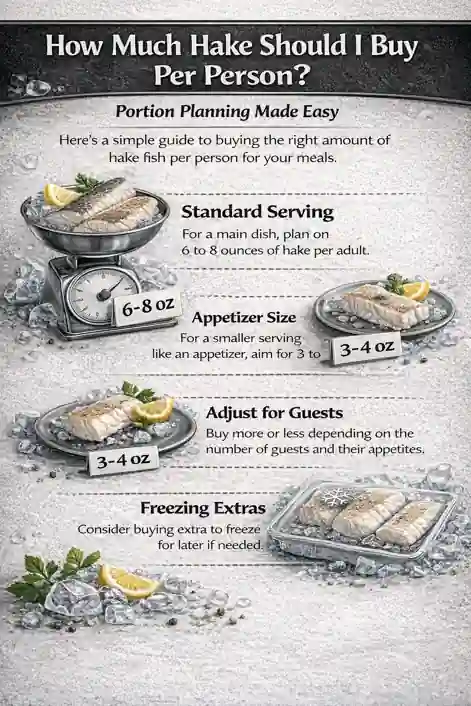
In professional kitchens, a typical serving of hake ranges from 5 to 6 ounces (140–170 g) per person when served as a main course. This accounts for light moisture loss during cooking while still delivering a satisfying portion on the plate.
If hake is part of a multi-course meal or paired with hearty sides, portions are often reduced to 4–5 ounces per person without sacrificing balance.
Whole Fish vs Fillets: How the Cut Changes the Math
Portion planning depends heavily on the cut. Fillets are the most straightforward, as they’re already trimmed and ready to cook. The whole hake requires accounting for bones, head, and trimming loss.
As a general rule:
Buy 7–8 ounces per person for skin-on fillets.
Buy 10–12 ounces per person for the whole fish.
This aligns with the yield expectations chefs use to avoid under-serving.
Portion Sizes for Different Diners
Not every table eats the same. In practice:
Light eaters or lunch portions: 4 ounces per person
Standard adults: 5–6 ounces per person
Heartier appetites: 7 ounces per person
Adjusting portions this way helps reduce waste while keeping plates consistent.
Planning for Groups Without Guesswork
When cooking for groups, it’s safer to plan on the higher end of portion ranges, especially if hake is the primary protein. Buying slightly more also accounts for trimming and ensures even portioning.
A simple rule chefs use: round up to the nearest pound once totals are calculated to allow flexibility during prep.
Bottom Line on Portion Planning
Hake is forgiving, flexible, and easy to portion when you follow kitchen-tested standards. Planning based on cut, cooking method, and audience ensures you buy just enough—no shortages, no excess.
“When we hake in the kitchen, we don’t guess—we plan around yield, cooking loss, and how the fish sits on the plate. Five to six ounces per person works in most cases because it delivers a full portion after cooking without waste, which makes portion planning far easier when building an accurate recipe costing template. Once you understand how hake behaves, portioning becomes predictable, not subjective.”
Essential Resources
When chefs research a fish, they look past basic facts and cut straight to what affects performance in the kitchen, on the plate, and on the line. These essential resources give you the practical, trusted context pros rely on—species details, sustainability, safety standards, and nutrition—all in one place.
NOAA Fisheries – White Hake Species Profile
Foundation for sourcing and seasonality insights
This official government profile breaks down how Atlantic white hake is caught, managed, and stocked—information chefs use to plan menus around availability and reliability.
https://www.fisheries.noaa.gov/species/white-hake
NOAA Fisheries – Silver Hake (Whiting) Overview
Clarifies one of the most commonly marketed hake forms
Silver hake, often sold as whiting, behaves differently across regions. This overview helps pros compare species traits before buying or menuing.
https://www.fisheries.noaa.gov/species/silver-hake
NOAA Fisheries – Red Hake Species Profile
Adds depth to Atlantic hake sourcing decisions
Red hake appears in some seasonal markets and regional wild landings. This profile gives the context needed to judge when it’s a viable option vs. standard fillets.
https://www.fisheries.noaa.gov/species/red-hake
NOAA Fisheries – Pacific Whiting (Hake) Resources
Authoritative West Coast hake data for supply planning
Pacific hake (or whiting) is one of the most consistent domestic hake sources. This resource collection covers management, trend data, and fishing methods chefs cite when evaluating suppliers.
https://www.fisheries.noaa.gov/species/pacific-whiting/resources
Marine Stewardship Council – A Foodie’s Guide to Sustainable Hake
Chef-focused sustainability perspective
This sustainability guide combines industry certification context with practical sourcing implications—helping chefs balance environmental standards with kitchen needs.
https://www.msc.org/en-us/what-you-can-do/choose-sustainable-seafood/foodie-guides/a-foodie-s-guide-to-hake
FDA – Seafood Safety & Regulatory Guidance
Critical safety and handling expectations for seafood
U.S. federal seafood guidance outlines safety, processing, and regulatory requirements that impact how hake is stored, shipped, and labeled—essential for kitchen risk management.
https://www.fda.gov/food/guidance-documents-regulatory-information-topic-food-and-dietary-supplements/seafood-guidance-documents-regulatory-information
WebMD – Hake Nutrition & Health Profile
Straightforward nutritional breakdown for menu positioning
This medically reviewed overview shows protein, calorie, and health benefit context for hake—information helpful for menu copy and guest nutrition questions.
https://www.webmd.com/diet/health-benefits-hake
Together, these resources give chefs a practical, professional lens for evaluating hake across species, safety, sustainability, and nutrition—helping them make informed kitchen decisions and clearly distinguish hake from skate fish during sourcing and menu planning.
Supporting Statistics
1) Seafood is still under-consumed in the U.S.
Fewer than 25% of adults eat seafood twice per week.
Even lower intake among children.
In practice, this reflects buyer hesitation around freshness and portioning, not lack of interest.
Source: https://www.cdc.gov/nchs/products/databriefs/db538.htm
2) Federal guidelines drive portion planning.
FDA recommends at least 8 ounces of seafood per week for most adults.
Professional kitchens commonly reverse this into 5–6 oz portions per serving.
Lean fish like hake fits this model cleanly.
Source: https://www.fda.gov/food/consumers/advice-about-eating-fish
3) Hake is a documented low-mercury fish.
Mean mercury level: 0.079 ppm.
Based on decades of FDA commercial seafood testing.
Supports hake as a repeat-use protein.
Source: https://www.fda.gov/food/environmental-contaminants-food/mercury-levels-commercial-fish-and-shellfish-1990-2012
4) Most seafood already travels through long supply chains.
U.S. per-capita seafood consumption: ~20.5 lb/year.
Volume depends on controlled cold-chain logistics.
Handling matters more than purchase location.
Source: https://www.ers.usda.gov/data-products/charts-of-note/chart-detail/?chartId=108472
Bottom line:
The data supports what chefs see daily—clear portion standards, low-risk species, and disciplined handling are what make seafood buying predictable and reliable.
Final Thought & Opinion
Portioning hake looks simple, but experience shows it works best when planned around yield and cooking loss, not raw weight alone. That’s why professional kitchens consistently land in the 5–6 ounce range per person.
What Works in Practice
Portions based on cooked yield stay consistent.
Hake’s forgiving texture makes it easy to serve repeatedly.
Low mercury and strong nutrition support regular use.
Why Portion Planning Matters
Reduces overbuying and waste.
Prevents under-serving at the table.
Creates predictable results from prep to plate.
Bottom Line
When portion decisions are grounded in how hake actually cooks and serves, buying becomes confident and repeatable. The result is less guesswork, better control, and consistently better plates within a well-run kitchen brigade system.
FAQ on Hake Fish
Q: What’s the right portion of hake per person?
A: A reliable standard from kitchen experience is 5–6 ounces cooked per person, which accounts for normal cooking loss and plates consistently.
Q: Does the cut of hake change how much to buy?
A: Yes. Fillets are ready to cook, while whole hake requires buying more to account for bones and trimming in order to reach the same cooked portion.
Q: Is hake suitable for repeat meals or meal prep?
A: Yes. Hake’s mild flavor, low mercury profile, and forgiving texture make it practical for frequent use and advance preparation.
Q: Should I buy extra hake for guests or groups?
A: In practice, buying slightly more than the target portion helps avoid under-serving and gives flexibility during prep.
Q: Does frozen hake affect portion planning?
A: No. When properly frozen and thawed, hake yields consistently, so portion planning remains predictable.